

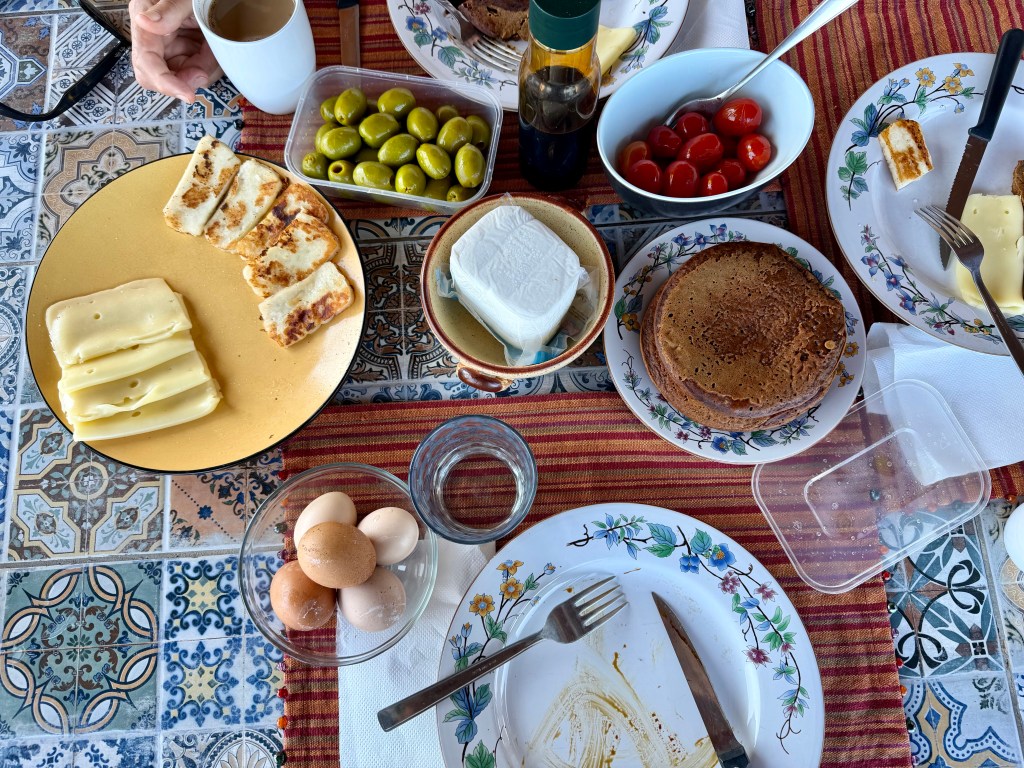
Visiting a friend in Pomos we were treated to a very special breakfast. Carob pancakes made with carob flour and served with carob syrup, both made by him at home. There were of course other delights like halloumi, anari, hard boiled eggs, cherry tomatoes and olives. The carob offerings were the most interesting for me so this blog is a little insight about them.
Cyprus is rich in carob trees. In ancient times they formed its main export. In a land shaped by drought, invasion, and uncertainty, the carob tree endured, feeding people and funding villages. It is extremely hardy as a tree and has deep roots so can survive long dry summers.
It was a main export for the island. At its height, Cyprus shipped tens of thousands of tons annually, primarily to Britain, where carobs were used as animal feed and industrial raw material.
Before refined sugar became common, carob syrup, known as haroupomelo, was Cyprus’s primary sweetener. Made by soaking crushed pods and boiling the liquid into a thick molasses, it flavoured everyday cooking and helped preserve foods. At some point is was considered a substitute for chocolate.
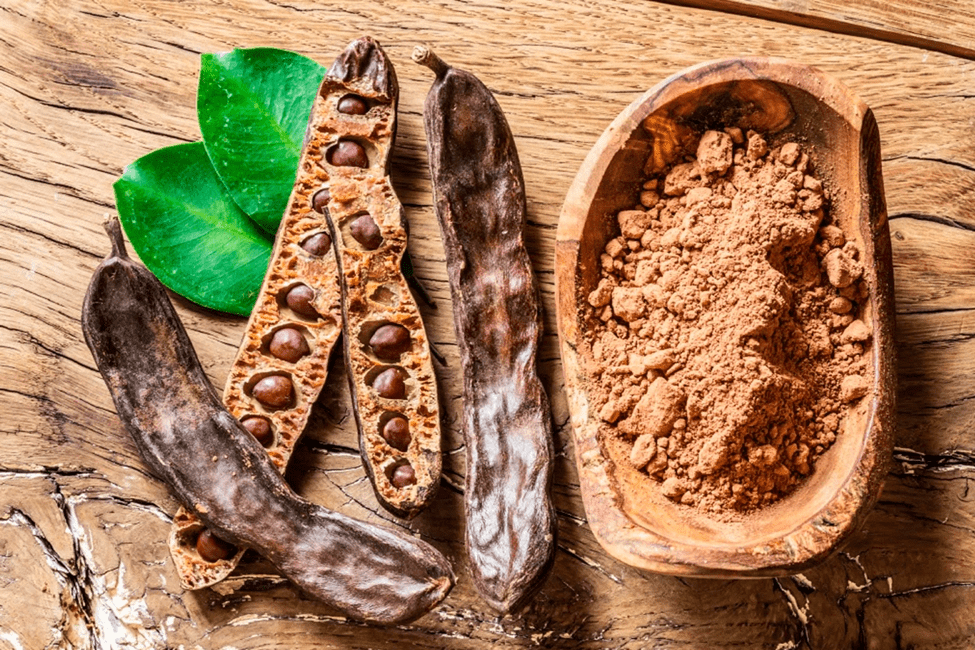
The carob tree (Ceratonia siliqua) is historically known as “black gold”. Its hard, shiny seeds are very special weighing 0.2 gms each. The carat – the unit of measurement for the size of diamonds and other gemstones – is based on the weight of a carob bean, which is remarkably consistent from pod to pod and tree to tree. There are records of carob beans being used to weigh gems as early as the Roman period, and it is thought that the word carat actually derived from these pods.
The Etymology: The Greek word for a carob seed is kerátion. This evolved into the Arabic qīrāṭ, which later became the English word “carat”. And so the story goes – Carob to Carat ! Now you know.


Leave a Reply