

The Cave is in a mountain nearby. To our huge surprise it is monumental. Its history and discovery astonishing and its depth impressive.
Let’s start with its wide entrance. There to one side a massive stalagmite is estimated to be 45 million years old, making it the oldest in Europe.
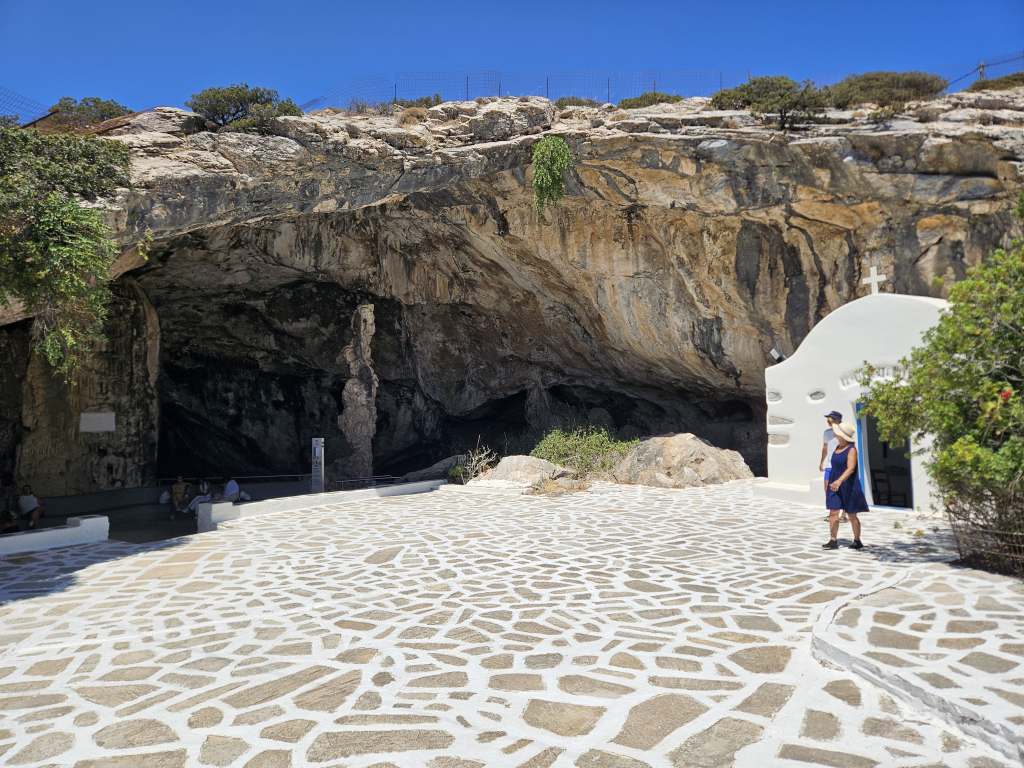
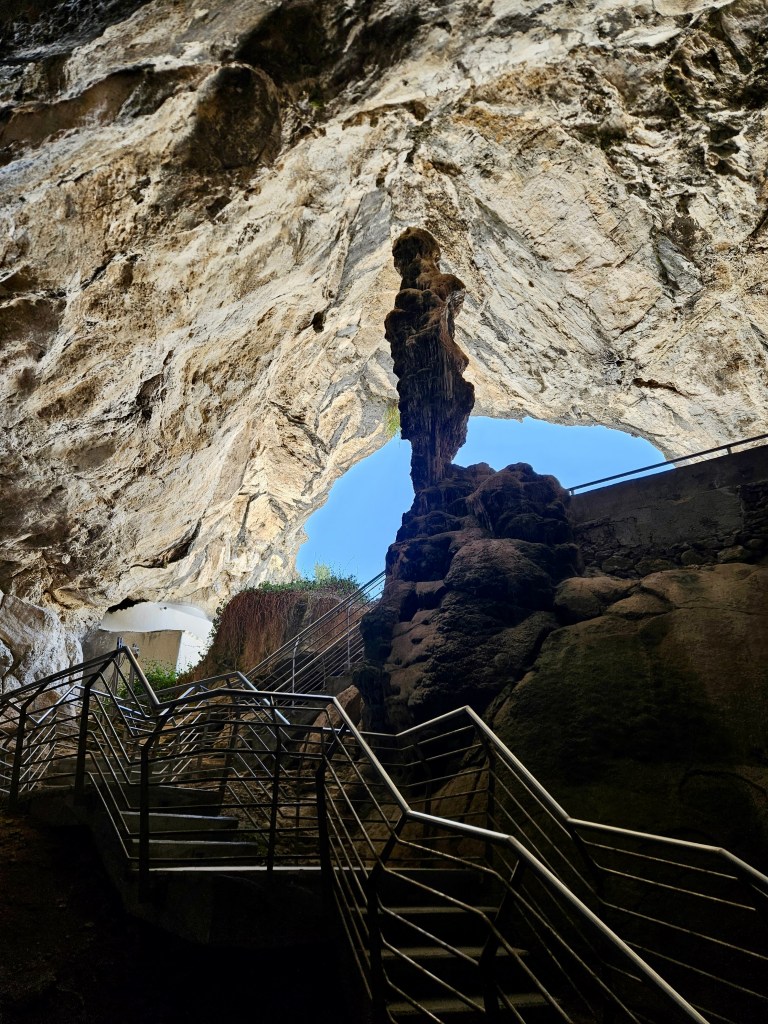
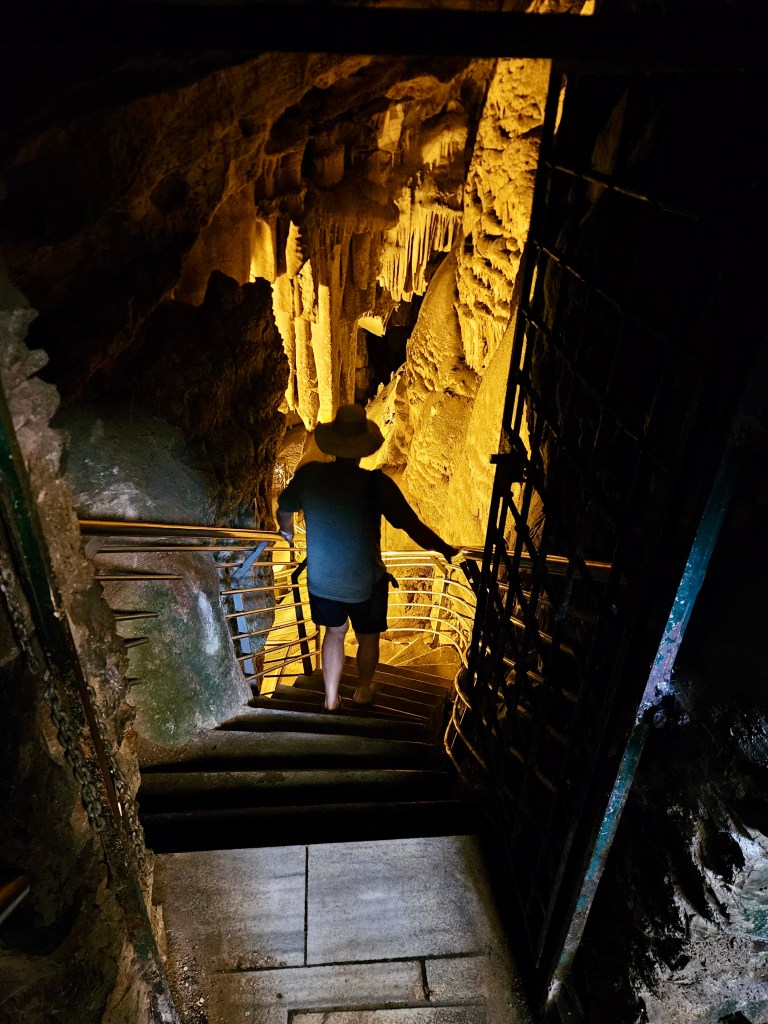
It goes down to a depth of 85 metres with some 411 very well constructed steps and balustrades. It is divided into four levels. The ‘Antechamber’ and three additional halls: ‘The Chamber of the Stone Waterfalls’; ‘The Chamber of the Cathedral’; and ‘The Royal Chamber’. What makes it so interesting is that there are clear messages or graffiti from visitors many years ago. Bad habits live on do they not- our need to leave a mark or to take things away both of which happened here.
Archilochus (c. 680 – c.645 BC), the Greek lyric poet from Paros, was reportedly the first known visitor.
In Dec 1673 the Marquis of Nointel who, during the reign of Louis XIV served as French ambassador to the Ottoman Court in Istanbul, was on Paros, collecting archaeological finds on behalf of France. While overseeing the loading of antiquities for France, the Marquis was informed that some colossal statue was located on the neighbouring island of Antiparos.
He left immediately for the island, with an accompaniment of 500 people that included painters, designers, builders, Jesuits, Capuchins, Turks and pirates. He reached the entrance to the Cave on Christmas Eve, only to discover—to his disappointment—that the supposed statue was huge stalagmite.
He immediately took the decision to hold Christmas Mass in an area known ‘as Ayia Trapeza’, Holy Altar. In this area illuminated by 100 large candles and 400 oil lamps. That must have been amazing. Τhey remained in the Cave for three days and nights and slept near the ‘Ayia Trapeza’. However, as painters ‘immortalized’ the Cave in their artworks, other members of the entourage detached huge pieces of stalactites and stalagmites that were subsequently loaded onto ships bound for France. This marked the first major damage of the Cave.
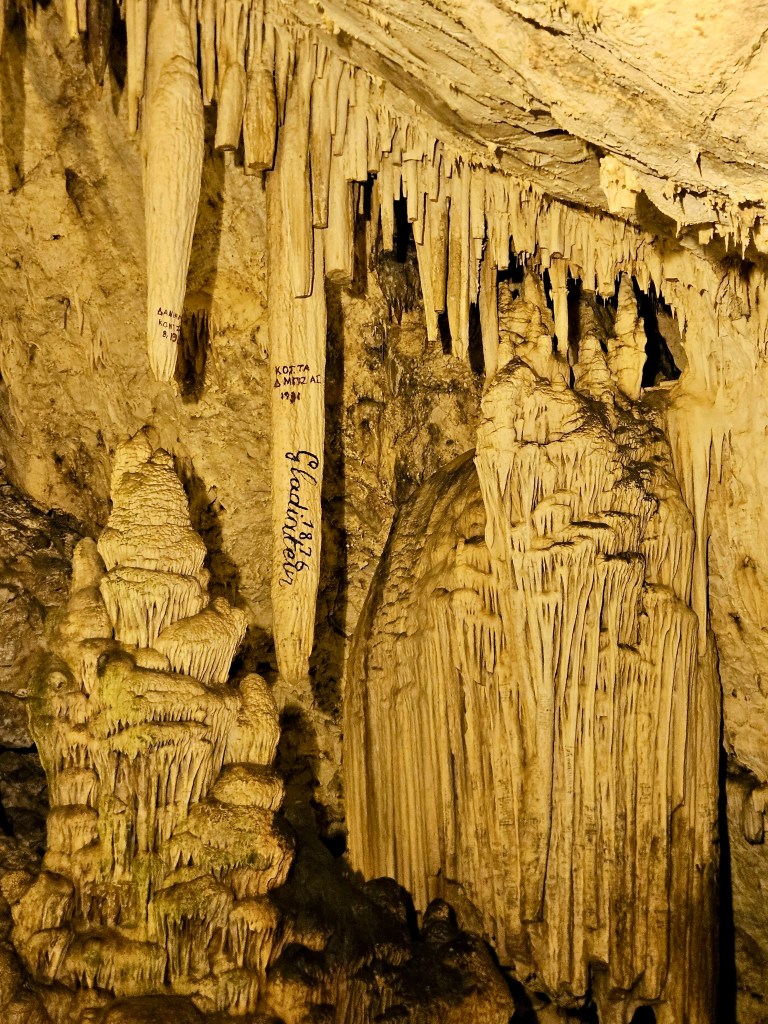
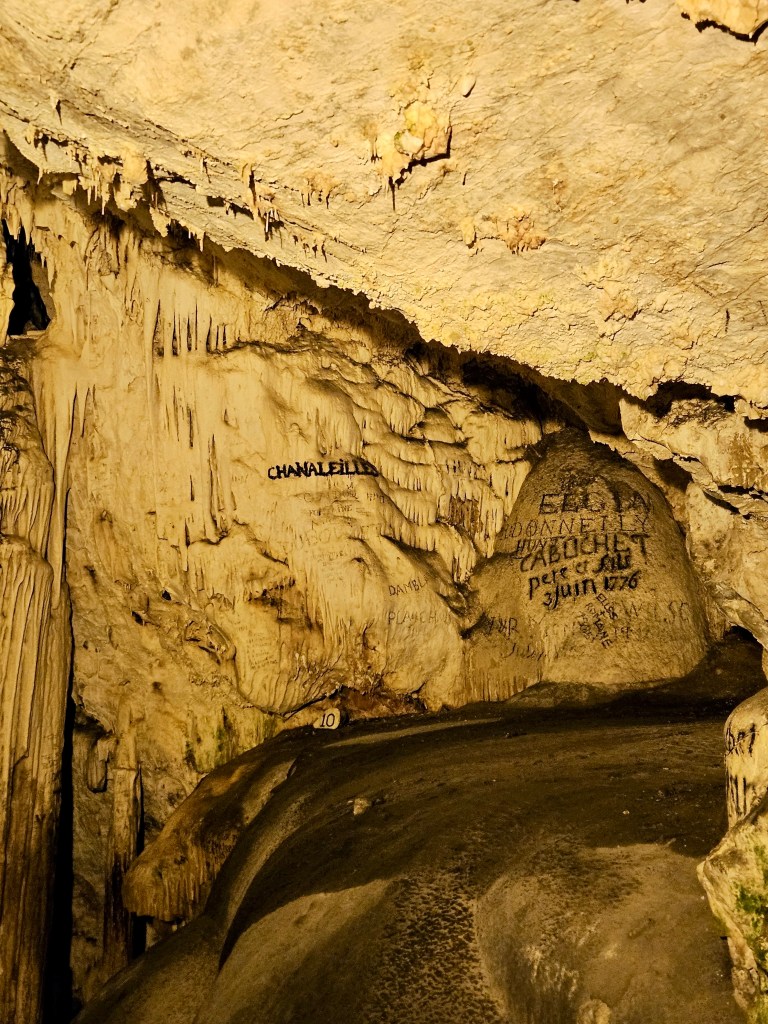
There are bits of the stalagmites in museums in Russia and Germany and of course over the years others have left their mark on them as well. I suppose that gives us some of its history and longevity. There are warnings now not to do so and people with breathing problems should perhaps think twice about going into it.
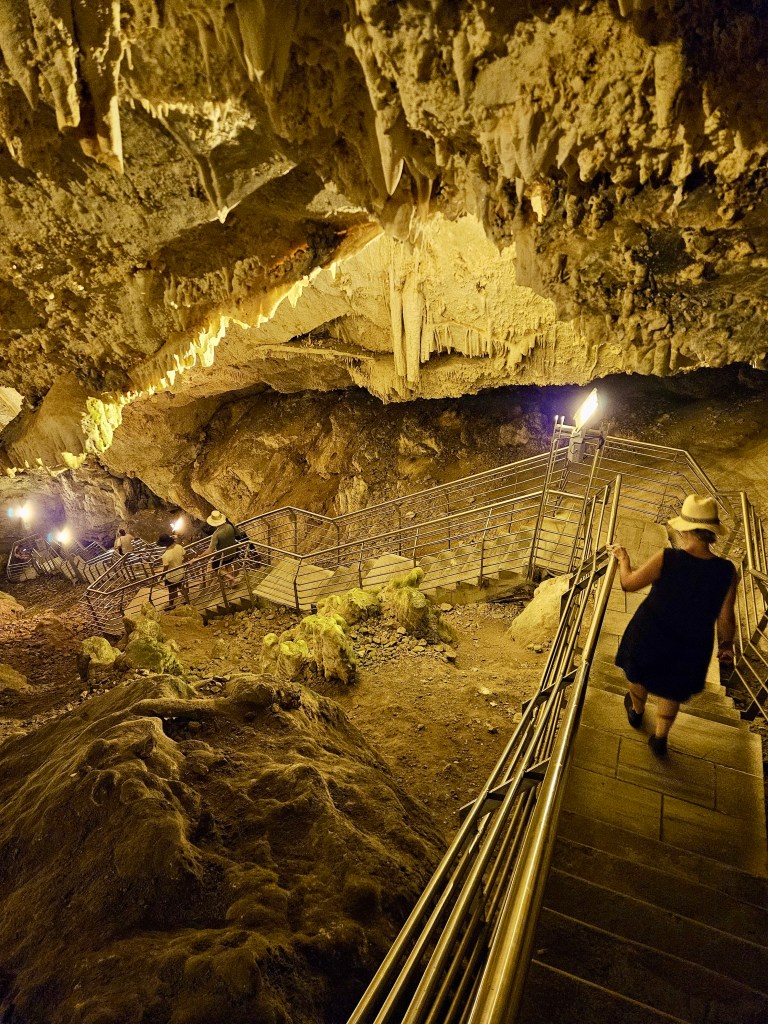
Its cool and clear. It’s depth surprising. It’s history remarkable. We managed the 411 steps to tell the tale.
 Mezze Moments
Leave a comment