

Following some very hot days we noticed that the bees in one of our hives were bearding – a term to describe them gathering outside the hive to cool the hive down and give it more ventilation.

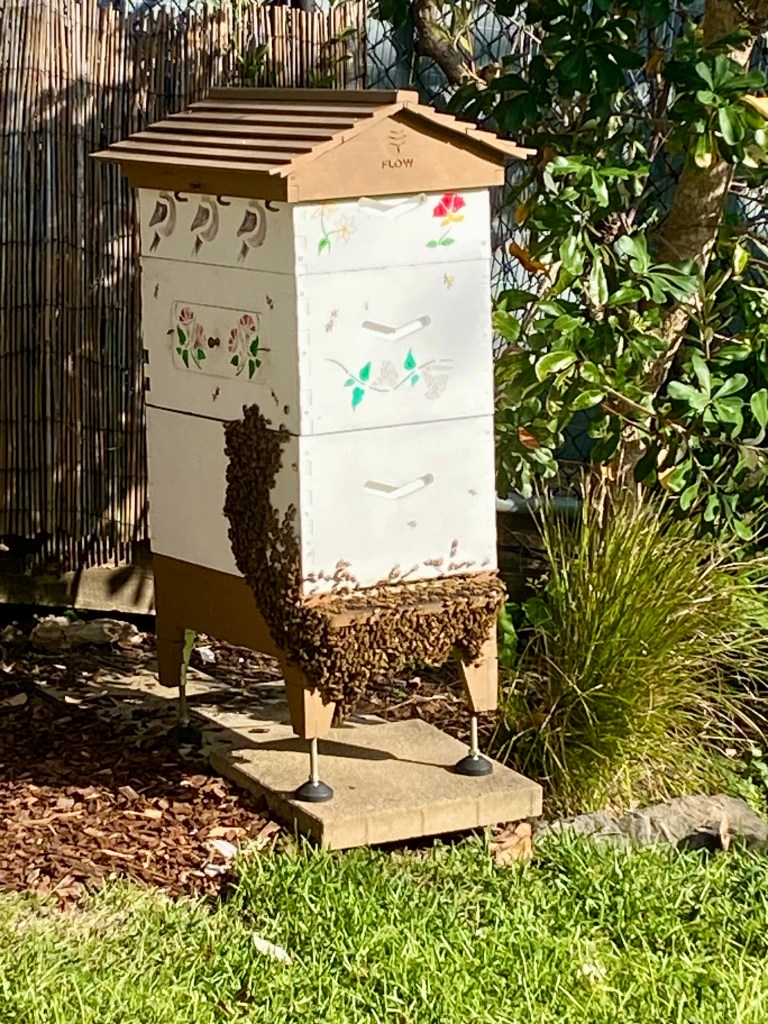
A few days later our lovely neighbour who was lying on the lawn with his young son looking up at the clouds above ( what a great idea ) noticed a swarm on a tree. Our bees. He alerted us immediately and we started devising plans of what we could do. Get in another beekeeper to catch them, don our beekeeper outfits and catch them ourselves. Put up ladders, prepare boxes and even a tether to lower the branch holding them to be shaken into the box.
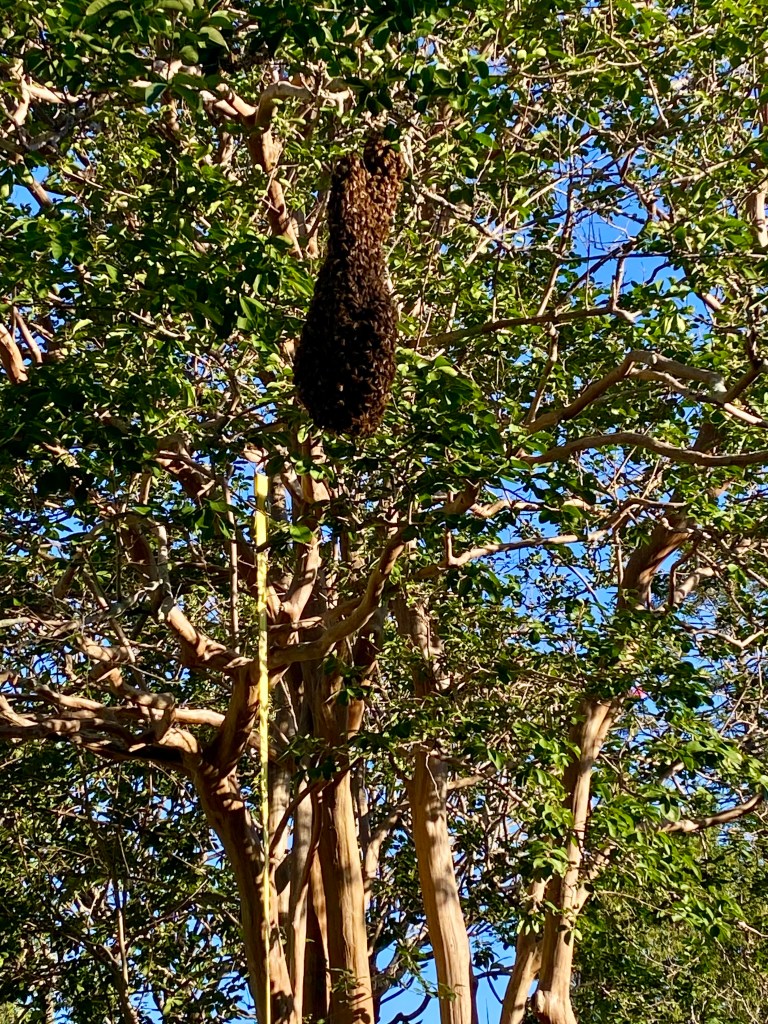
We woke up the next morning and … they were gone.
Our native stingless bees are also in a bit of turmoil and I am thinking they might be swarming too. Here they are buzzing about the hive.
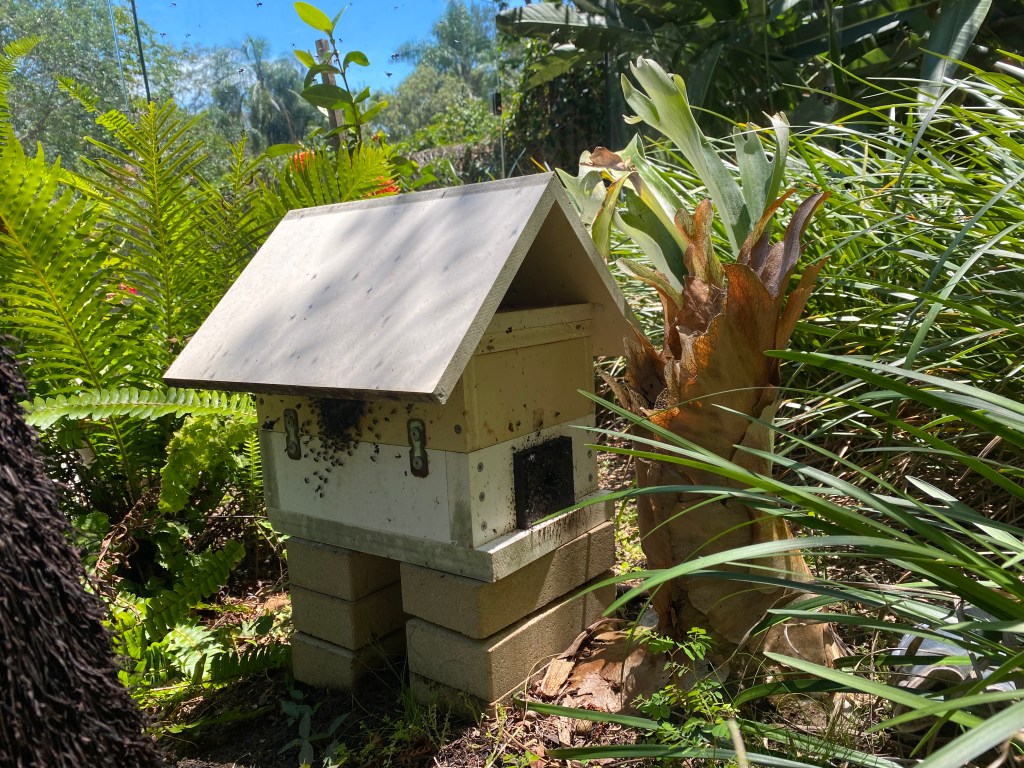
Watching these amazing bees act like this raises a thousand questions in me. How do they know when to swarm ? Does the queen say ok guys and gals it’s getting a bit squashy in here, follow me and let’s go and see the beereal estate in the area. How do the worker bees know to follow the queen? Who goes with her and who is left behind ? Where is she in that mass? How do they hang on? They need to find a new home quickly as they have no supplies.
This is a little of how it happens
- Old queen and workers leave: When a hive becomes too crowded, the queen stops laying eggs to reduce her weight and about half the workers will leave with her.
- Formation of a temporary cluster: The swarm flies to a nearby spot, such as a tree branch, and forms a dense cluster around the queen. They are in a resting and waiting state while scout bees search for a new home.
- Scout bees find a new home: Scout bees fly out to find a suitable cavity, like a hollow tree. They communicate the location and distance to the new home using a “waggle dance”. Several scouts go out to search for the new home.
- Moving to the new location: Once a consensus is reached, the entire cluster flies to the new location and begins building comb and raising brood to start the new colony.
- Original hive raises a new queen: In the original hive, the remaining workers raise a new queen from the queen cells. The first one to emerge will often kill the other queen larvae to become the sole new queen.
What I find so amazing is that they regulate their overpopulation by themselves. They send out the scouts who look around and come back and deliver the message with their waggle dance.The waggle dance delivers direction and distance information. Only when they have reports from various scouts and a clear choice then very democratically and by consensus they all fly off to the new location. Oh to be a Queen Bee, even an old one, going to pastures new with loyal mates. Those bees have it all worked out – respect.


 Mezze Moments
Leave a reply to mezzemoments Cancel reply