

Alfred Russel Wallace is regarded as the father of biogeography. He was an avid collector, an environmentalist, a contemporary of Darwin’s, a slighter younger man ( he was a pallbearer at Darwin’s funeral ) he travelled through the Malay archipelago collecting an astonishing 125,660 specimens from 1854.
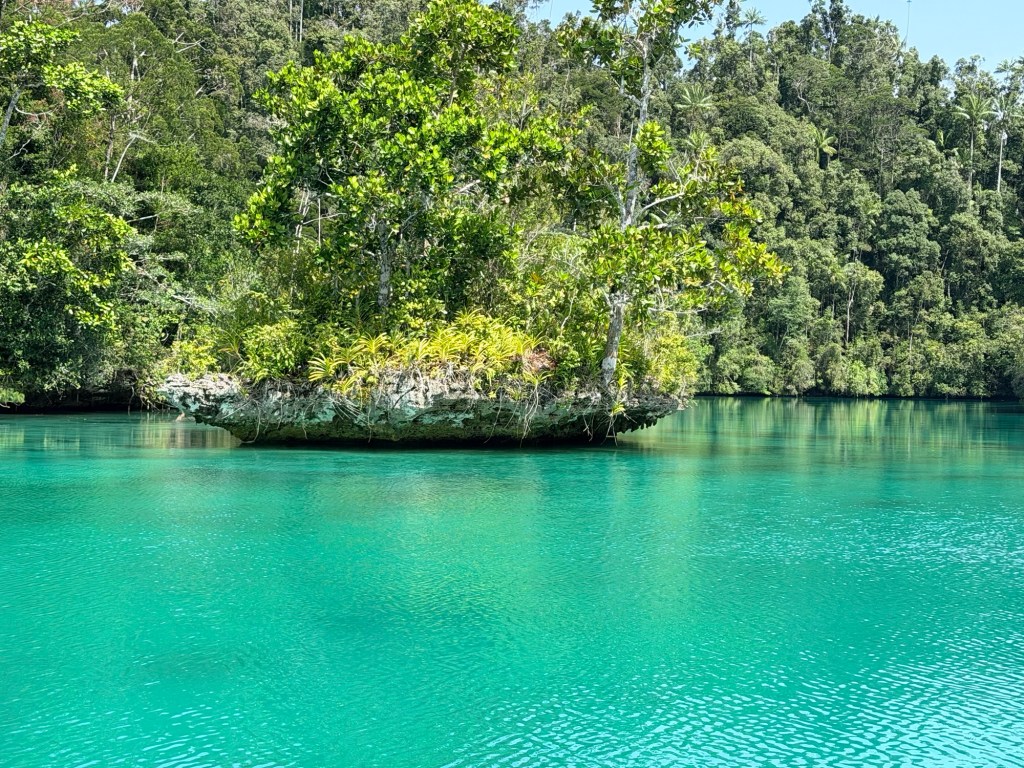
He loved beetles and birds and introduced the west to some 5000 new species.
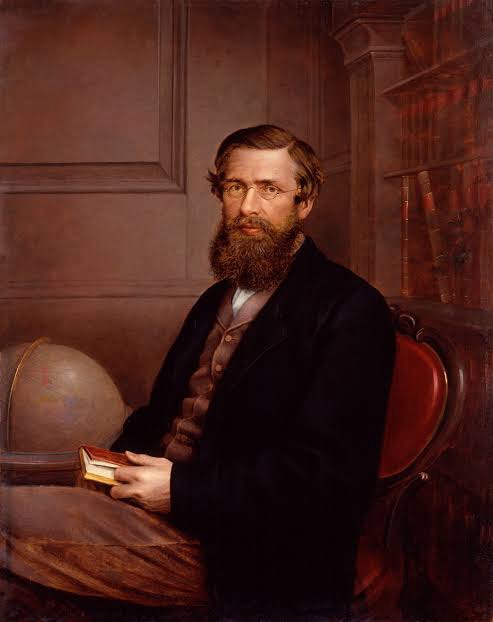
He noticed a pattern in the distribution of animals and birds and proposed an imaginary line dividing the region into two parts.
The one side had Asian animals the other Australian. This became known as the Wallace Line and can be seen on maps between Bali and Lombok and through the Makassar Straits with species like tigers and monkeys on the Asian side as opposed to marsupials and cockatoos on the Australian side.
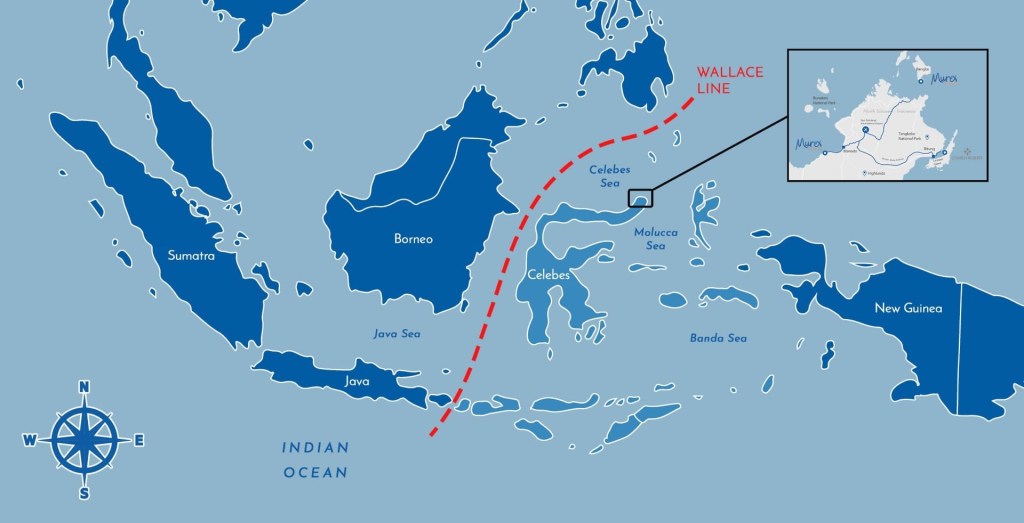
The explanation is that deep ocean channels made it difficult for the animals to cross and the birds were poor fliers.
He also came to develop a similar theory on the evolution of the species alongside Darwin. Wallace believed plants and animals evolved to their environment and Darwin believed adaptations were driven by competition.
Both had their treatises published at the same time but it was Darwin who remains the better known.
I love the insights into the lives of these early explorers and conservationists.
 Mezze Moments
Leave a comment