

Starting with green and loggerhead turtles that come to Heron to nest. Their eggs are well protected but the chicks fall prey to silver gulls and reef sharks so while there may be hundreds coming out of the sand, very few survive to adulthood.
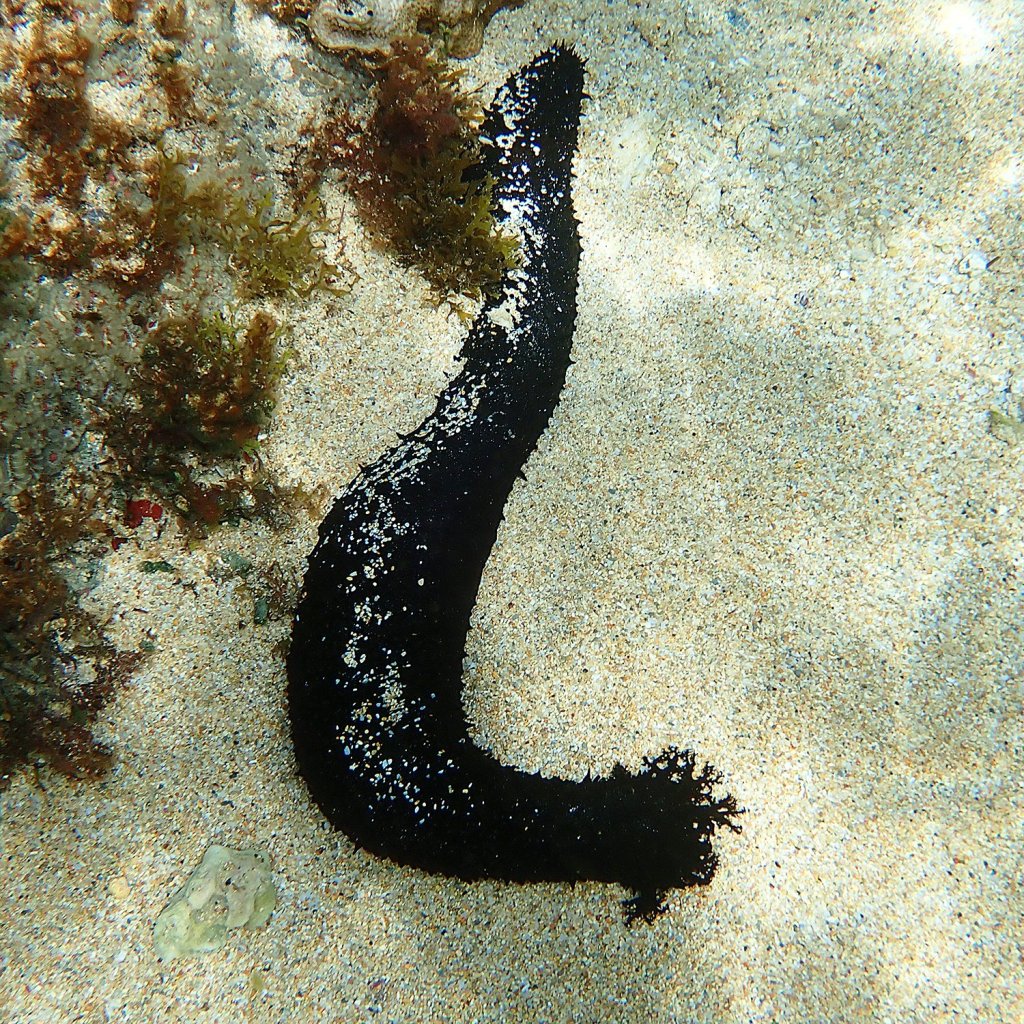
The reef around the island is ideal for snorkelling and we saw more sea cucumbers then we could wish for. The sandy sea cucumber, the Licorice sea cucumber, the Long black sea cucumber and the Bumpy sea cucumber. They were everywhere. As they eat their way around the reef, they reduce the levels of decaying organic matter in the environment, recycling it into useful nutrients (like phosphorus and nitrogen) for other animals and plants.As they churn through the sand, they help mix oxygen through the layers, helping the tiny lifeforms that live in the sediment grow and prosper.Despite their shape, slow lifestyle and lack of brain, sea cucumbers have a massive role in their environment and are vital for healthy reefs!
Sadly we also saw quite a lot of bleaching of the corals. Some parts are regenerating but it is a slow process.
We saw green turtles in the water happily swimming around.

We saw lovely small clams with mantels of blue, black and purple.
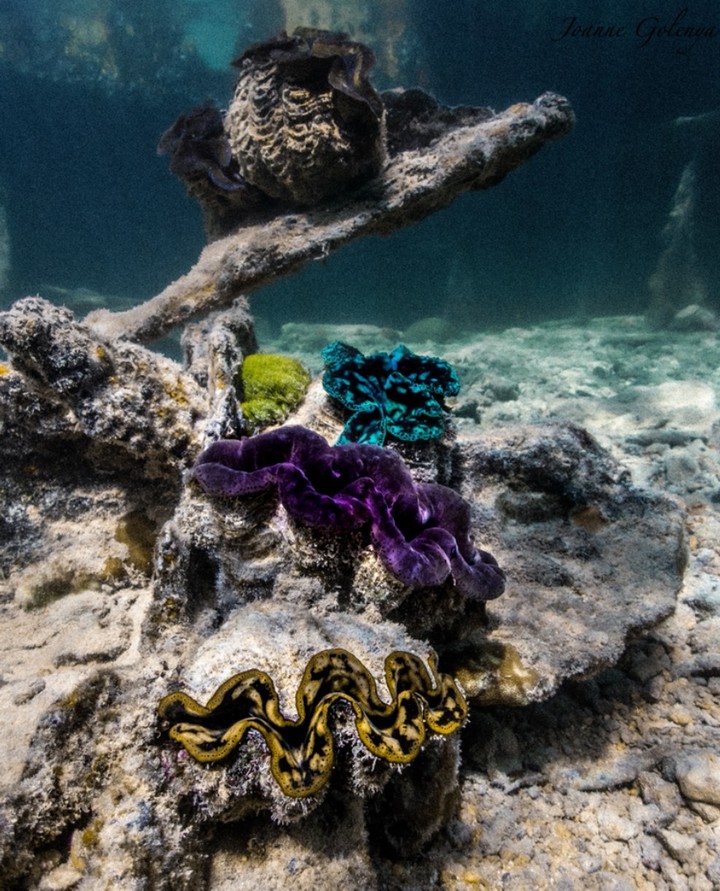
 : instagram.com/joannegolenya– taken at the wreck in Heron.
 Probably my favourite sightings were the rays – we saw three types. The blue spotted lagoon ray, eagle rays with long tipped tails and the grey and brown cow tail rays which tended to swoop around the water in groups. An occasional black tipped reef shark would swim by and schools of parrot fish, trevally and a honeycomb cod which was unusual. All the Photos are courtesy of others.



There is a saying “Happy as a Clam in high water.”
That is when the clams are protected from predation by birds and humans.This idiom originated in the United States around the year 1830.
We were certainly as happy as clams as high tide was when we could snorkel and see all the marine life.
 Mezze Moments
Leave a comment