

Except here we are talking about BIRDS!
One of the main reasons for going to Heron is its birdlife. A Bird haven.
Just like we can be visitors or residents so can the birds. In fact we can probably make out four categories, Residents, Visitors, Breeders and Migratory birds and I am going to give you just a snapshot of each but not exhaustive lists. I heard some lovely stories which make them more memorable.
The Residents.
The buff banded quail – aka the restaurant bird – beautiful colours and darting around everywhere trying to find a caterpillar or someone’s leftovers. You think they cant fly – the dart around like mad, get under your feet, steal your crisp. Chase each other around.

One of the guides told us how at one point they thought they were too many on the island so they took some one hour away by boat to another island called North West island. By the time they got back to Heron half the quails had flown back too – so they can fly after all!
The egrets, another resident, look as if they have no neck, until the extend it and then it is long and elegant. Here is a pair, on an octopus bush branch just outside our cabin. They can be a couple but one gene, the grey is recessive and one dominant so they either come out white or grey. They also apparently practice control over their population. They have two eggs but only one is allowed to survive. They mate for life.


The Visitors
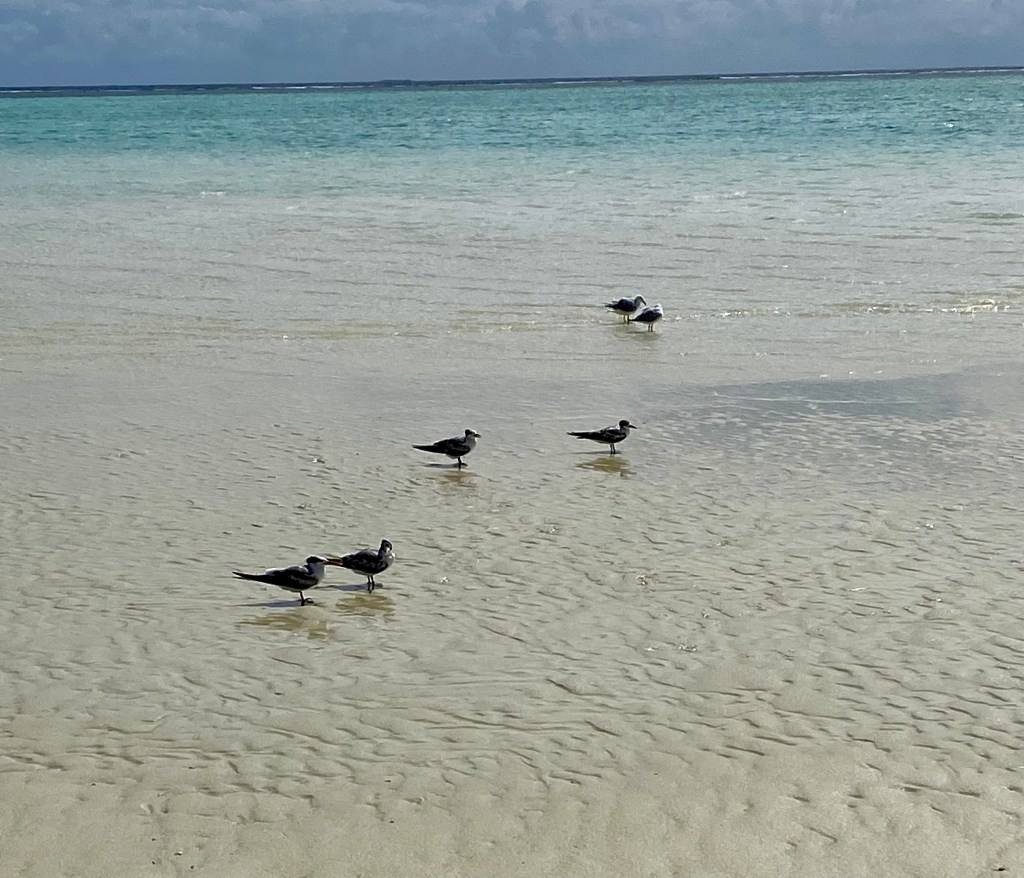
There are a few, crested terns, brown boobies- here are a few crested terns on the beach.
The Breeders
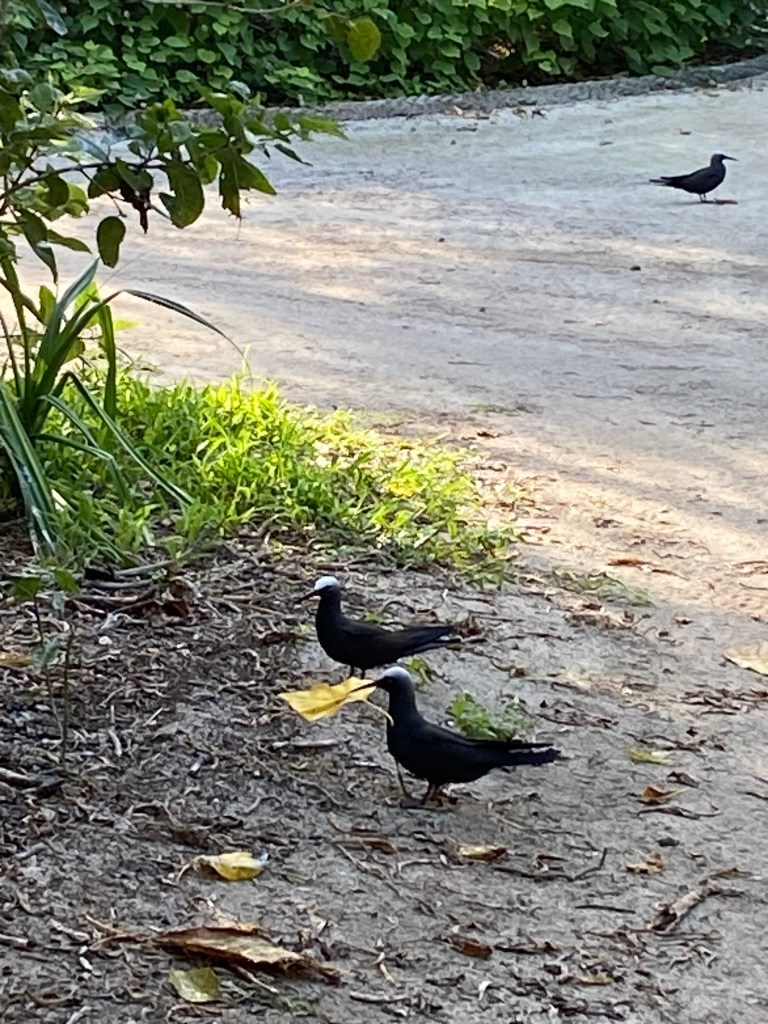
The white capped noddy terns. This is probably the biggest group and they number in their thousands. The noise is deafening.
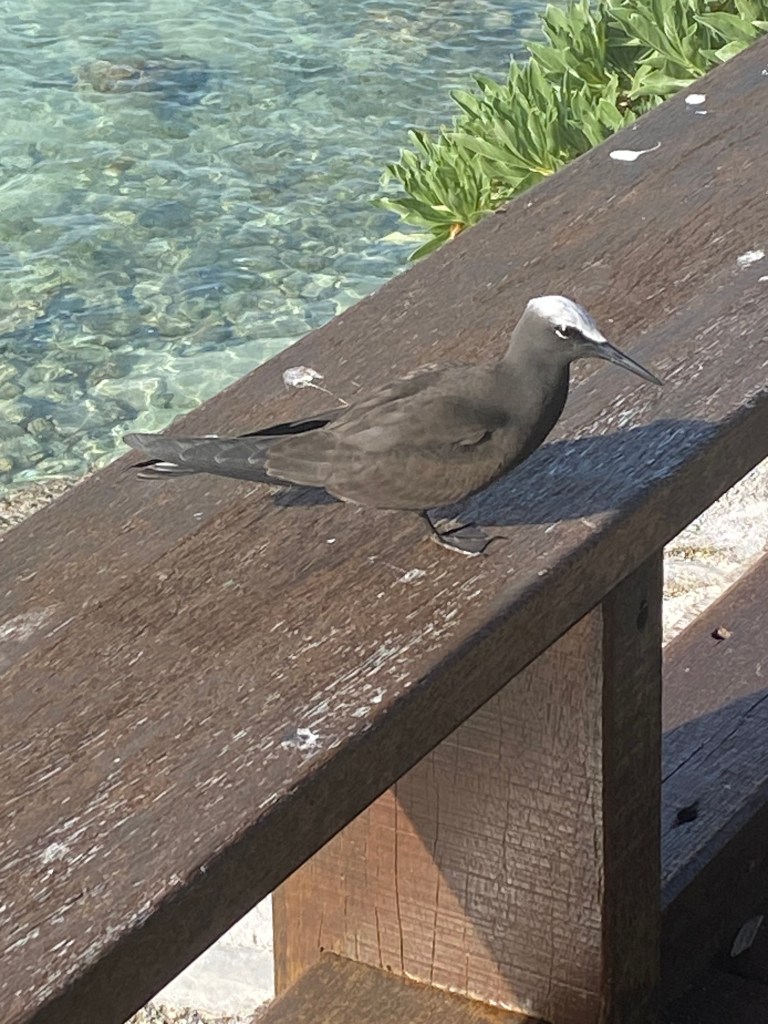
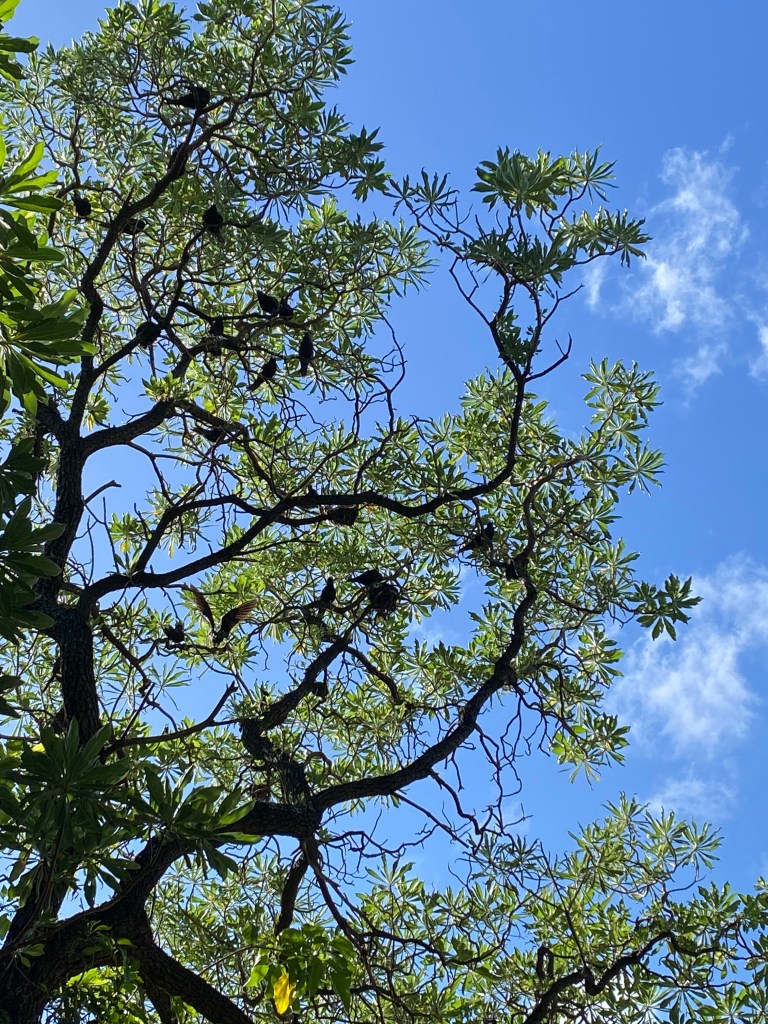
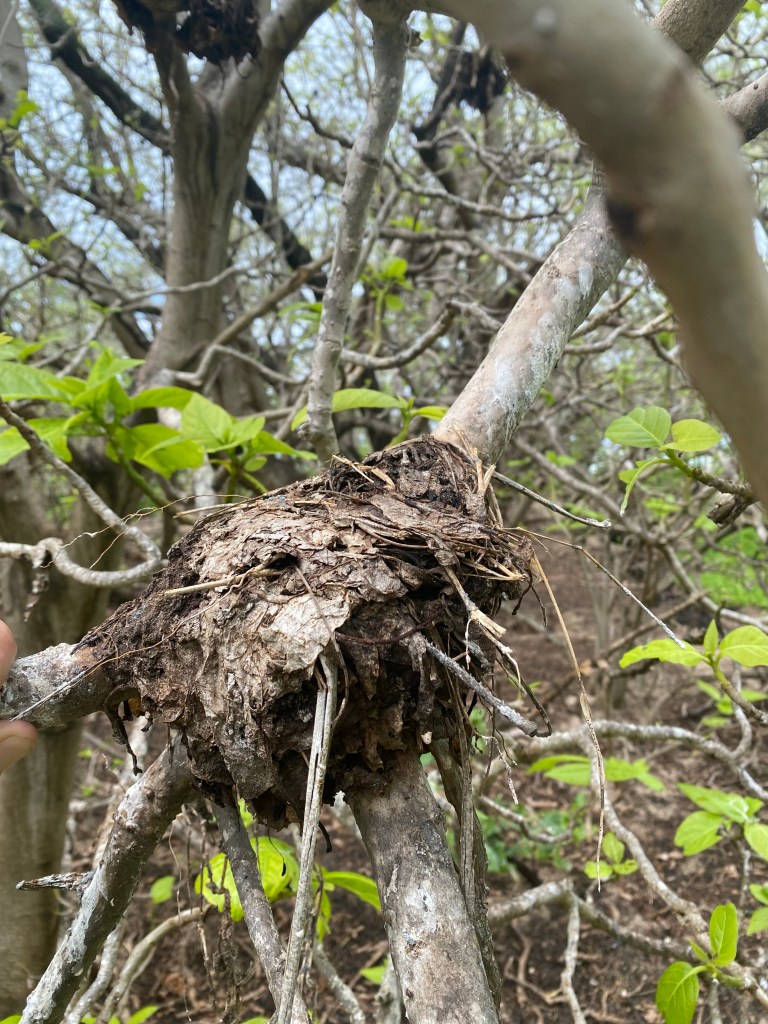
They nest on the branches of a lot of the trees in the forest but their favourite is the Pisonia tree. In the mating season around Sept / Oct time the male takes to the skies and does pivots and dances and sees which female can keep up. When he has chosen a partner they return to a tree and the female chooses her spot and then the male’s job is to find choice Pisonia leaves for the nest. The female can throw them out if she deems them unsuitable but if it is a good one she will keep it and poo on it and gradually more leaves will be added on which she will lay a small egg. The Pisonia tree has sticky buds and some of them get distributed by the birds so it is symbiotic in a sense.

The Mutton bird – a wedge tailed shearwater also returns here to breed. Some 20,000 of them. They lay their nests in burrows on the ground. When mum and dad return at night they have a lonesome wolf call. Apparently their love song to one another. They feed their chicks well to about 2 months and then off they go and the chicks have to fend for themselves but also learn how to fly with many mishaps. It takes them a while to find their wings. There are many stories of the chicks learning how to fly and bumping into people and buildings.
The bird calls, trilling, tweeting, chirping, screeching, it was good to hear them more than us.

Migratory
Ruddy tern stones and bar tailed godwits. What a place to be a resident, visitor, breeder or just a bird passing through.


 Mezze Moments
Leave a comment