

The signs were not favourable. A weather forecast of a storm and strong winds ahead. We set off immediately worried that we might get stuck in Chalki. The sea was churned up and we lurched a lot, got sprayed a ton and wondered if breakfast would stay down. Mercifully the spectre of the mighty storm faded and as we neared Rhodes, the waters were calmer and we sailed into port relieved and a little hungry.
We headed into the medieval city with the perfect history guide, Auntie Anna.
The Knights of St. John of Rhodes (also called as Knights of Rhodes) have a long and fascinating history, tracing back to the 11th century. Originally known as the Knights Hospitaller, the order was founded to care for sick and injured pilgrims traveling to the Holy Land.
In the 14th century, the Knights of St. John were established when the order was forced to relocate from Jerusalem to the Aegean island of Rhodes. It was there that the knights achieved great military prowess, defending the island against invaders for over two centuries.
We visited the Hospital of the Knights and the Palace of the Grand Master full of the most amazing mosaics and pebble art I had no idea before I set out on this trip when I started doing pebble art that it was so popular in this area of Greece and how they have created the most intricate floors with the stones.
Rhodes is a Unesco Heritage Site protected by a vigilante pussy cat.

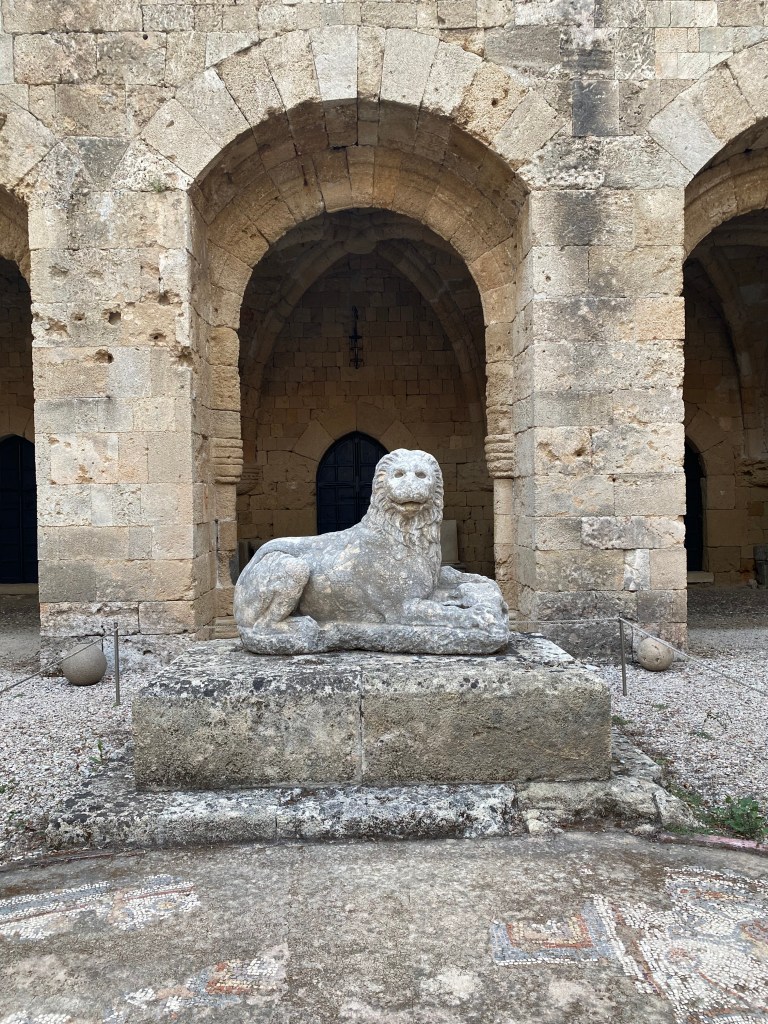

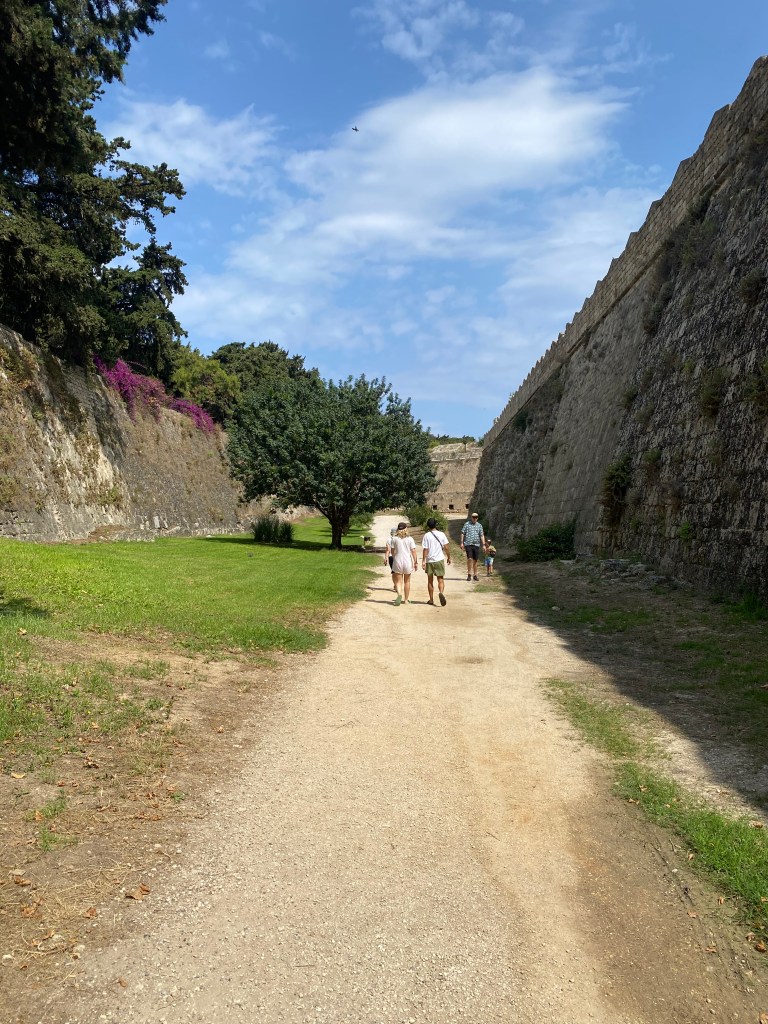

We walked around the old city in the perfect moat. We explored the museum and the beautiful rooms of the Palace and then celebrated G’s birthday in a fabulous restaurant within the walls.

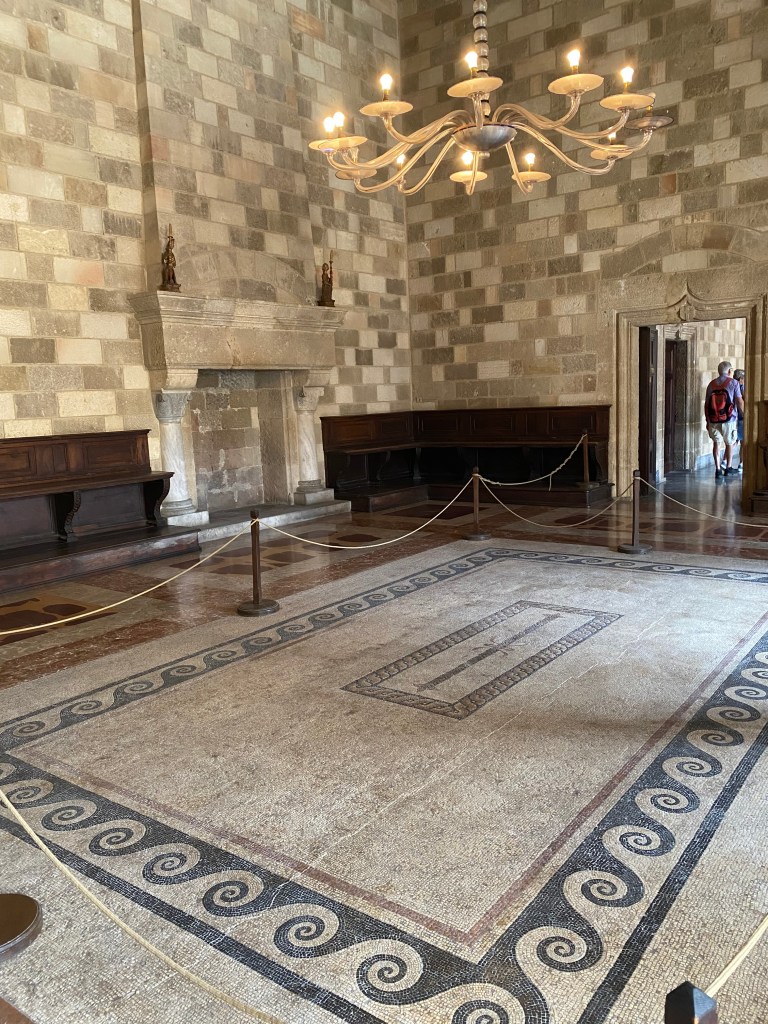
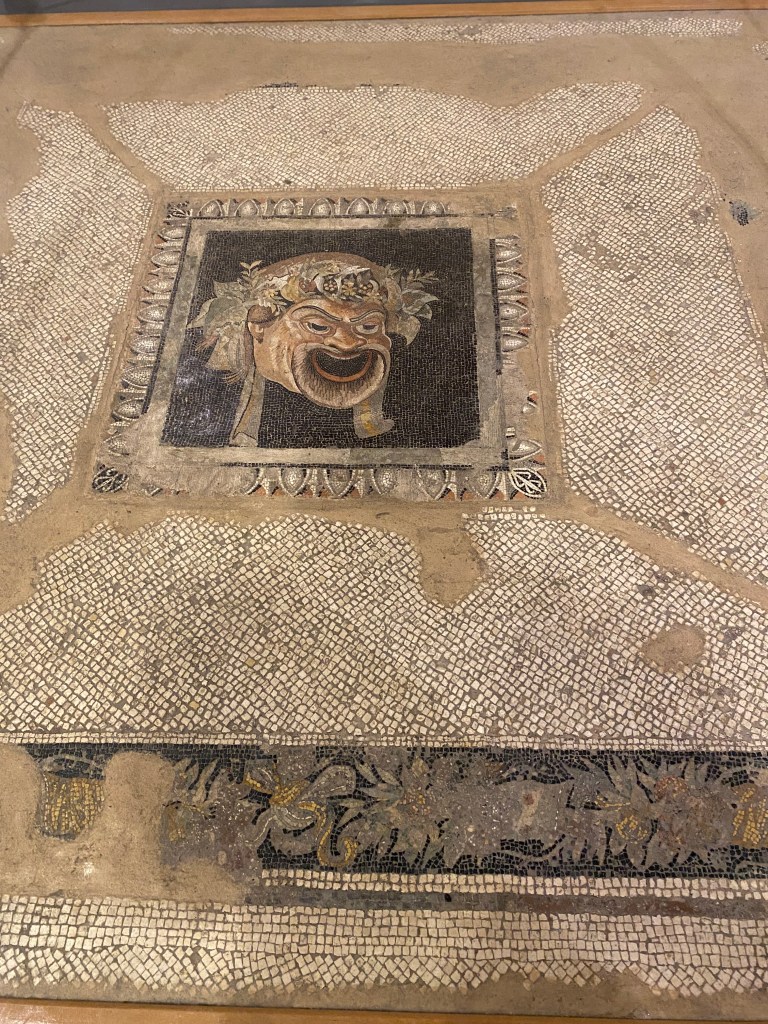
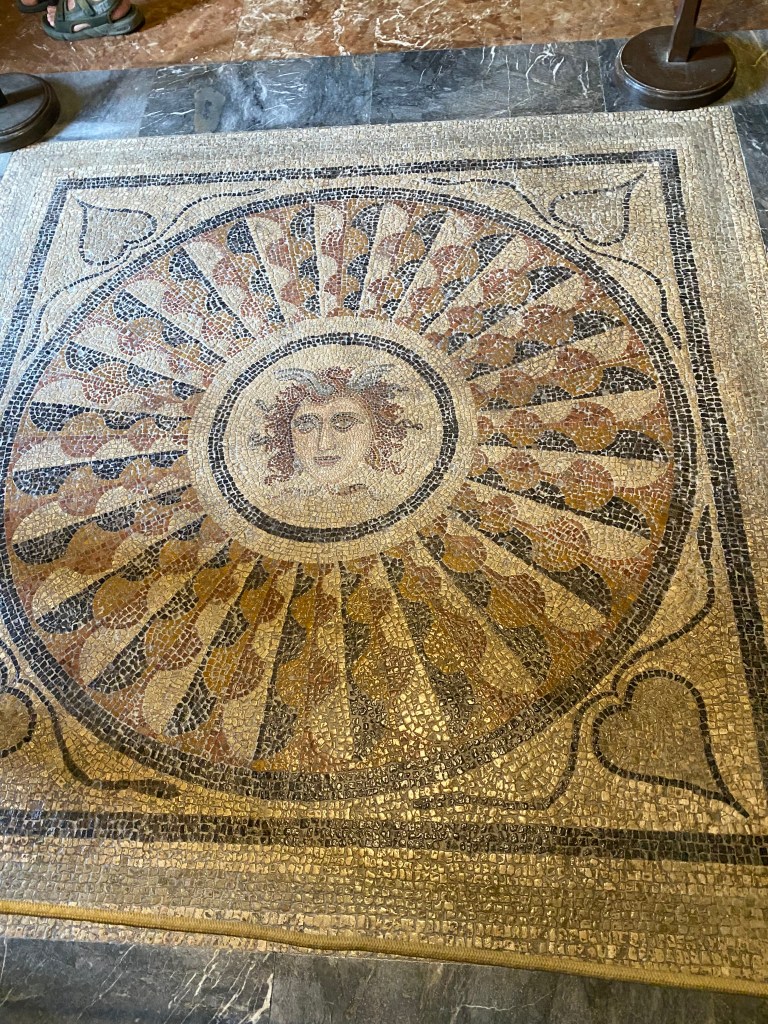
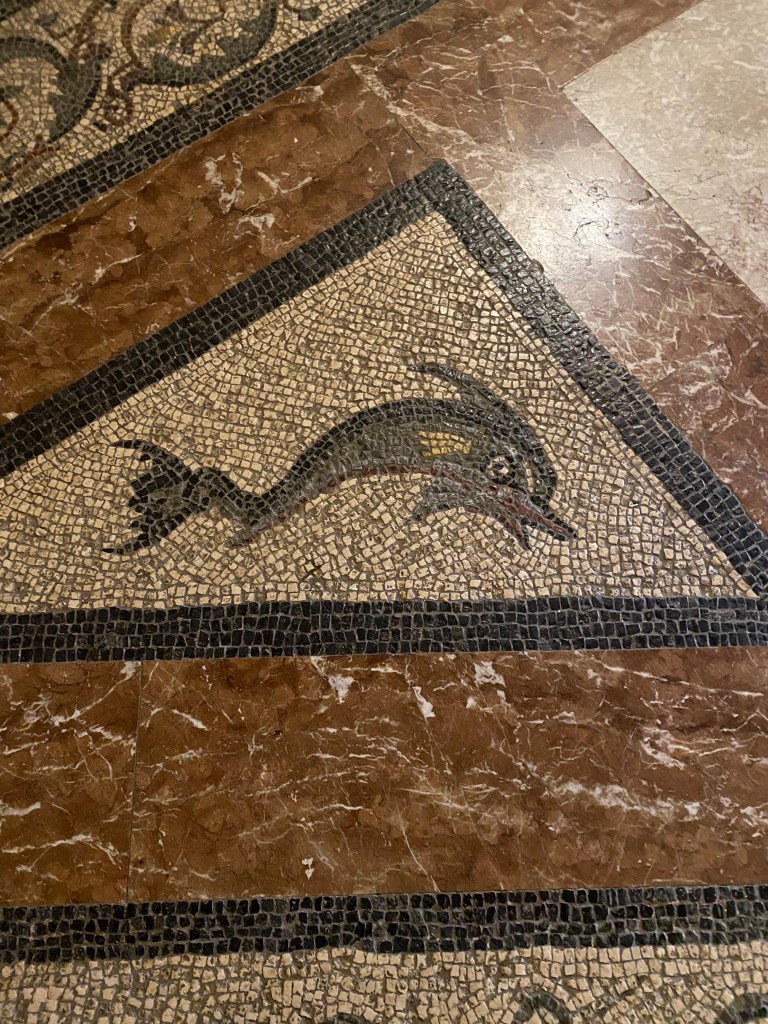
Every single room – massive, high vaulted, with deep and beautiful fireplaces had a floor of its own design. They say their provenance was the island of Kos and we are trying to solve the mystery. Were they transported fully made, did they assemble them on the spot? Why Kos and what was so special about their mosaic floors? Needless to say even without the answers we thought they were spectacular and suspect the people of Kos would have been proud to see them so admired, if not miffed they were no longer on their island.
It is the end of our journey and as the Greek writer Kazantzakis said :
“Happy is the man, I thought, who, before dying, has the good fortune to sail the Aegean sea.”


 Mezze Moments
Leave a comment